
Getting found · 5 min read
What does a photographer's website need?
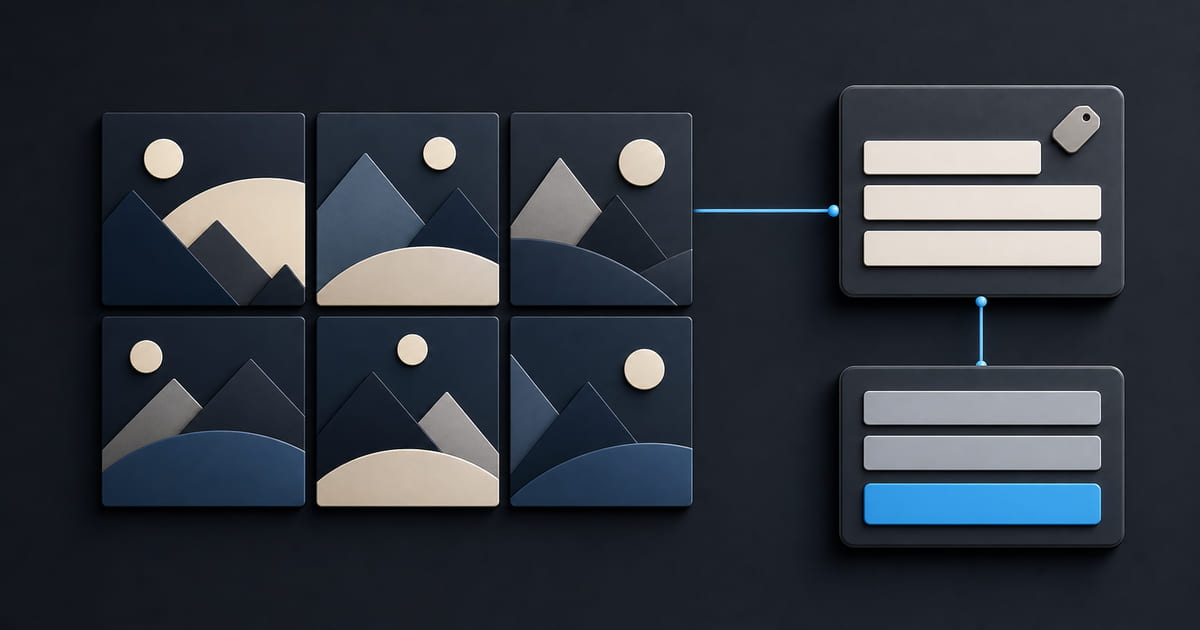
The short answer
Fewer photographs than you want to show, prices in some form, and an obvious way to enquire. Photographers lose work by publishing enormous galleries that load slowly and never mention cost — a client comparing three photographers picks the one whose site loaded, showed twenty excellent images rather than four hundred good ones, and answered what a wedding costs.
On this page
Show less
Photographers are the profession most likely to publish too much work, and it costs them twice.
It costs them speed. Four hundred full-resolution images is a page that takes ten seconds on mobile data, and most clients are browsing on a phone in the evening. The site that loads wins the comparison before the work is even judged. See how do I speed up my website.
It costs them judgement. A client cannot evaluate four hundred photographs. They form an impression from the first ten, and if the first ten include three that are merely fine, that is your average — not your best. A portfolio is judged on its weakest visible image, not its strongest.
Twenty images per category, ruthlessly chosen, converts better than everything you have ever shot. If a photograph is not among the best you have, it is actively lowering the impression of the ones that are.
Organise by what the client is buying
Not by shoot, and not chronologically. By the thing somebody is searching for: weddings, portraits, commercial, events, food, product.
Somebody planning a wedding wants to see weddings — a full wedding, start to finish, so they can imagine their own day. They do not want a mixed feed where a wedding sits between a restaurant menu shoot and a corporate headshot. Mixed galleries read as a portfolio; separated galleries read as a service.
This also does the search work for you. A page about wedding photography in your city can rank for that; a single gallery page cannot rank for six different things at once.
The pricing question
Photographers avoid this harder than almost anyone, and the reasoning is familiar: every job is different, packages vary, and a number without context might scare someone off.
But a client planning a wedding is budgeting. If they cannot find any indication of your cost, they cannot include you in the plan — so they enquire with the photographers who published a starting price and simply do not enquire with you. You never see that loss, which is why the practice persists.
You do not have to publish a rate card. "Wedding coverage starts at X." "Portrait sessions from Y." "Most commercial day rates fall between A and B." Each is honest, none commits you, and all of them beat silence. The argument in full is in should I put prices on my website.
What happens after the enquiry
This is where photographers lose more work than on the site itself.
Enquiries arrive in a state of excitement and a short window. The photographer who replies within a few hours with availability and a price wins a disproportionate share, and it is very often not the best photographer of the three.
Two practical things. Make sure the form actually works — a silently broken contact form is catastrophic in a seasonal business where a month of silence looks like a quiet season. Test it monthly. And acknowledge immediately, even if the real reply comes later. An instant confirmation with your name on it buys you the hours you need to answer properly.
The things clients ask that should be on the page
- How many images do I get, and when?
- Do you travel, and is there a fee?
- What happens if it rains, or if I need to reschedule?
- Do you have insurance, and a backup camera?
- Can we see a full gallery rather than highlights?
That last one is worth taking seriously. Highlights are easy; a complete set from one event is what proves consistency, and very few photographers publish one.
What this looks like in Helm
The portfolio has to be yours to change. Your best work is always the most recent, and a gallery that needs a developer will be a year behind — which for a business selling on current work is fatal. On Helm images are fields you edit and press Go Live on, so the site keeps pace with the shooting.
Enquiries land somewhere you can see. Forms come with every subscription rather than as an upsell: submissions arrive in a proper inbox in the dashboard with spam handled, and the person enquiring gets an automatic reply carrying your own branding — your logo, your colours, your name as the sender. In a business where response speed decides the booking, an immediate acknowledgement that looks like it came from you is doing real work.
Bookings and deposits are a module if you want them — a request inbox and the sessions behind it, on your own domain, at a flat cost rather than a commission.
Clients can attach reference images or a mood board to the enquiry form, which for a photographer is worth more than most fields on it — what somebody wants is far easier to show than to describe, and seeing it up front tells you whether the job is yours. Up to three files a submission, ten megabytes each, so a reference arrives at a quality you can actually judge. It is switched on per studio rather than by default. Everything stays attached to the enquiry on your dashboard rather than in an email thread, and files are stored privately behind links that expire.
The short version
Cut the portfolio to your best twenty per category. Split galleries by what people search for. Publish a starting price. Then make sure the enquiry reaches you and gets acknowledged immediately — because in this business the photographer who replies first is very often the one who gets booked.