
Getting found · 4 min read
What should a garage or mechanic's website have on it?
The short answer
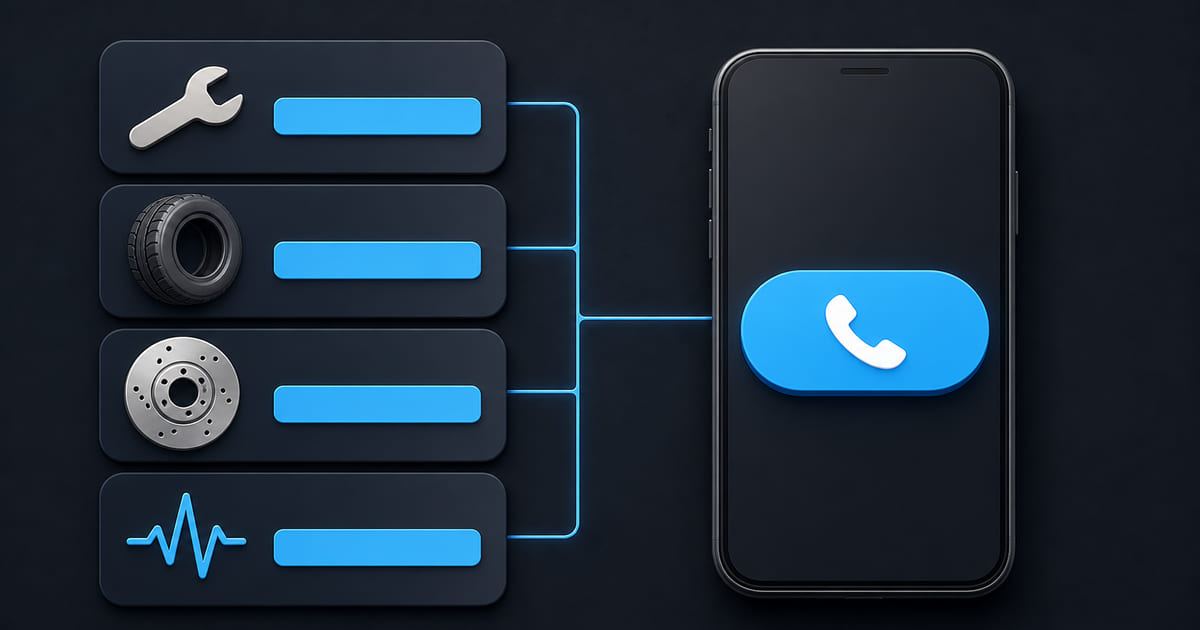
Three things decide it. Be findable for the specific job somebody needs — MOT, clutch, aircon regas, diagnostics — because that is what people search, not "garage". Publish something about price, even a range. And make booking or enquiring possible in one tap, because a driver whose car will not start is not filling in a six-field form.
On this page
People search for the job, not the garage
This is the structural mistake, and almost every garage site makes it.
Nobody types "garage". They type the thing that is wrong, or the thing that is due: MOT near me, clutch replacement cost, aircon regas, brake pads, engine warning light, diagnostics, timing belt, tyre puncture repair. Each of those is a different search with different intent and, often, a different level of urgency.
A single page listing twelve services in bullet points cannot rank for any of them well. Twelve short pages, one per job, each answering what it involves, roughly what it costs and how long it takes, can rank for all of them — and each page arrives with a customer who already knows what they want.
That is the entire local SEO play for a garage, and it beats anything else you could spend the same effort on. See what is local SEO.
The pricing question, specifically for garages
Motor trade has a trust problem it did not entirely earn, and it shapes how people shop. A driver choosing between three garages is, mostly, trying to work out which one will not overcharge them.
Publishing nothing confirms the fear. Publishing a range dissolves it.
You do not need a full price list, and for diagnostic work you genuinely cannot give one. But you can say: MOT is a fixed price, here it is. An hourly labour rate, stated. "Most clutch replacements on a common hatchback fall between X and Y depending on parts." "Diagnostics is a fixed fee, and it comes off the bill if you go ahead with the work."
That last one is worth singling out. The diagnostic fee is the moment most drivers hesitate, and explaining it plainly on the page converts better than any amount of design. The wider argument is in should I put prices on my website.
What a stranded driver needs
A meaningful share of your traffic is somebody whose car has just failed. Their state is stressed, one-handed, and possibly at the roadside.
For them the site has one job: a phone number that dials when tapped, at the top of every page. Not an image of a number. Not buried in a footer. Not a contact form.
Everything else on the site is for the planned jobs — the MOT that is due, the service that is booked a fortnight out. Those people will read. The stranded ones will not, and they are the highest-intent visitors you get.
The trust signals that actually work here
- Real photographs of your workshop and your team. Not stock — see should I use stock photos. This trade especially: drivers want to see a real place with real people in it.
- Specialisms named plainly. German cars, hybrids and EVs, classics, vans, a particular marque. This filters strongly and it is what people search.
- Certifications and approvals, stated rather than implied by a logo nobody recognises.
- Reviews, and replies to them. In motor trade the reviews carry more weight than anything you write about yourself — see why reviews matter more than website design.
- How long you have been there. Longevity reads as accountability in this trade.
What this looks like in Helm
Two things matter for a garage specifically.
A page per job, and you can add them. The twelve-pages-instead-of-one strategy only works if adding page thirteen does not require a developer. On Helm the page content, and the SEO title and description behind each page, are fields you edit — so when you start offering EV servicing you get a page for it that month rather than at the next redesign.
Enquiries and bookings in one place. Bookings is a module giving you a request inbox and the ramps or bays behind it, on your own domain at a flat cost. Forms come with every subscription, so enquiries land in a proper inbox with spam handled rather than only in an email that might be filtered, and the customer gets an automatic reply carrying your garage's branding.
Customers can attach photographs to the booking or enquiry form, and for a garage that changes the quality of what reaches you. A photograph of the warning light, the damage or the tyre tells you in one glance what three messages of description will not, and it means you can often quote or order the part before the car arrives. Up to three photographs a submission, ten megabytes each. It is switched on per garage rather than by default. They arrive attached to the job on your dashboard, stored privately behind links that expire.
The short version
Build a page for each job people actually search for, not one list. Put a labour rate and an MOT price on the site. Make the phone number tappable at the top of every page for the driver who is not going to read anything. And use real photographs of your own workshop, because in this trade that does more work than the design does.