
Getting found · 3 min read
Does voice search matter for my small business?
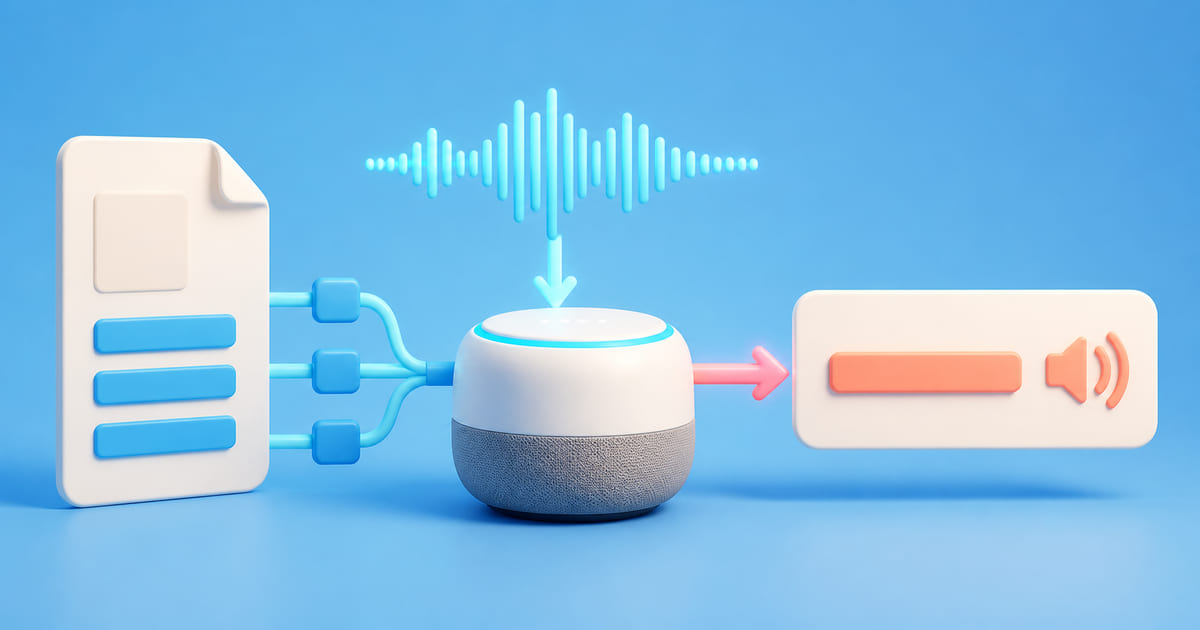
The short answer
Not as a separate project. Voice search returns one answer rather than ten links, so the work is making sure your facts are readable and specific — the same work that helps AI assistants and ordinary search. Complete your Google Business Profile, put your hours and address in text, and answer questions in the words people say aloud. That is the whole optimisation.
On this page
What actually changes
A typed search returns ten links and lets the person choose. A spoken query returns one answer, read aloud.
That is the entire difference, and it has one significant consequence: there is no second place. Being the fourth-best result is worth something in a list and nothing at all when only one answer is spoken.
Everything else people describe as "voice optimisation" follows from that.
What people actually ask by voice
Spoken queries are longer, more natural, and more often about immediate practical facts:
- "Are they open now"
- "How late is the pharmacy on the corner open"
- "Do they take bookings"
- "How far is it from here"
- "Do they do gluten free"
Notice what these have in common. They are questions with a single correct answer, and they are almost all about facts about your business rather than opinions or comparisons.
That tells you where the work is.
The work, in order
1. Your Google Business Profile. For local voice queries this is frequently the source of the answer directly — the assistant reads your hours or your address from it. A complete verified profile does more for voice than anything on your website.
2. Facts as text on your site. Hours, address, phone, prices, whether you take bookings, whether there is parking. In text, not in an image, and not only in a PDF.
3. Structured data. Labelling those facts explicitly makes them safer to read aloud. An assistant is more confident repeating a labelled opening time than a sentence it had to interpret.
4. Answer questions in the words people say. Not "our operational hours" — "we are open until 10pm on Fridays". Write the sentence the way somebody would say it, and it becomes quotable.
5. Be fast, and work on a phone. Most voice searches happen on mobile, often on a poor connection.
What not to bother with
A separate voice strategy. There is no voice-specific index. The same content serves typed search, voice search and AI assistants — which is convenient, because it means one job rather than three.
Keyword stuffing conversational phrases. Writing "near me" into your page repeatedly does nothing. The location signal comes from your profile and your address.
Building a voice app. Almost never justified for a small business.
The connection worth noticing
Voice search, AI assistants and featured snippets all want the same thing: a self-contained, specific, verifiable answer.
Which means the work is identical for all three. A page that says "We serve a set lunch Monday to Friday, 12 to 3, at 20 dollars" can be spoken aloud, quoted by an assistant, and pulled into a snippet. A page that says "come and discover our exciting midday offerings" can do none of those.
Write the first kind. You are not optimising for voice — you are being clear, and clarity is what all of these reward.
Both kinds of question need the same thing
Voice search and the AI assistants covered elsewhere on this blog are answered by the same machinery, which is convenient: there is one job here, not two.
Both need your answers as text on a page, phrased the way a person asks. Both need the facts they will read out to be current — hours, prices, whether you deliver — because an assistant reading out last winter's hours is worse for you than saying nothing. Neither can read a photograph of a menu, a price list inside a graphic, or a page that only assembles itself after JavaScript runs.
So the practical checklist is short. Real text, questions phrased as questions, structured data marking up the facts, and someone able to correct them the week they change.
Helm covers the structural half of that by construction — the pages ship as real HTML with structured data, and hours, prices and page text are fields you edit. The half it cannot do for you is knowing which questions your customers actually ask. That part is worth an afternoon with whoever answers your phone; they already know the list.