
Getting found · 4 min read
How do people actually find my business on Instagram?
The short answer
Mostly through other people — shares, tags, location tags and the explore feed — rather than through search. Instagram is a discovery-by-recommendation channel, not a search channel, which is why it reaches people who are already nearby your orbit and rarely reaches someone deciding where to eat tonight. Use it for what it does, and let your website handle the searching.
On this page
How discovery actually works there
Not by search. Almost nobody browses Instagram's search for a local café — they browse Google or a map.
What surfaces you instead:
Other people's shares. A customer posts your food and tags you. Their friends see it. This is the strongest mechanism by a wide margin, and it is entirely dependent on giving people something worth photographing.
Location tags. Someone browsing a neighbourhood location page sees your post. Genuinely useful and underused.
The explore feed. Algorithmic, unpredictable, and driven by what people already engage with.
Hashtags. Much weaker than they were, and a diminishing return. Three or four relevant ones is plenty; thirty is noise.
Word of mouth arriving as a username. Someone is told about you and looks you up. This is common, and it means your profile has to work as a landing page.
What this means for what you post
If discovery runs through other people, then the goal is being worth sharing, not posting frequently.
Things people photograph anyway. The plate, the room, the finished result. Make it easy to get a good photograph — light matters more than decor.
Things worth telling a friend. A genuinely new item, an unusual detail, something with a story attached.
Not: daily filler. Posting five times a week to an algorithm rewards nothing if none of it is worth passing on.
Make the profile work as a landing page
Someone told about you will check the profile before anything else. It has about five seconds:
- The bio says what you are and where. Not a slogan. "Lebanese bakery, Hamra. Open 7–7."
- The link goes somewhere useful — your menu, your booking page — not just the homepage.
- The location is set, so you appear on location pages.
- Recent posts show the actual thing you sell. Someone checking whether to visit wants the food, not a quote graphic.
- Contact buttons work. Test them on a phone that is not yours.
The limits, stated plainly
Instagram cannot:
- Be found by someone searching "brunch near me" who does not follow you
- Hold your opening hours somewhere findable in three months
- Be read by an AI assistant recommending a local business
- Be searched by anyone outside the app
Those are the website's jobs, and they are the ones that reach people who do not know you yet. This is not an argument against Instagram — it is an argument against expecting it to do a job it structurally cannot.
The arrangement that works
Instagram shows what the place is like and keeps you present with people who already know you.
Your website and Google profile get found by people who do not.
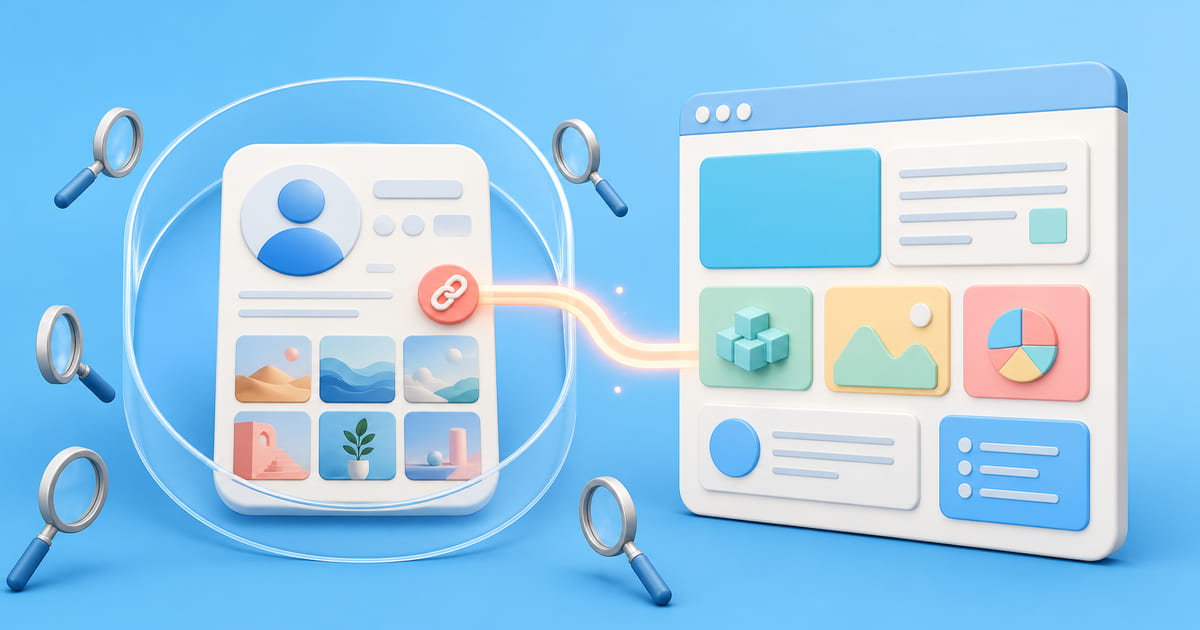
The link in bio connects them, which makes it the most valuable piece of real estate on your profile. Point it at the page that answers the question someone has right now — the menu, the timetable, the booking page — rather than a homepage they have to navigate from.
Where the link in your bio should go
Everything above is about being discovered. The last step is where you send people, and it is the one most accounts get wrong.
A link to a booking marketplace hands the relationship to the marketplace. A link to WhatsApp works until you are asleep. A link to nothing at all — no link, or a dead one — wastes every bit of the reach the rest of this article earned.
The link should go to your own site, to a page that answers whatever the post was about: the prices, the menu, the booking form, the new service. Instagram gets people interested. The site is where they find out whether it is for them, and it is the only part of this you own — see Instagram vs a website.
That only holds if the page is current, which is where it usually falls apart. You post four times a week and update the site twice a year, so the link starts pointing at something out of date and quietly stops converting. Helm exists to close that gap: the page behind the link is yours to change in a minute, so it can keep pace with what you are actually posting about.