
Templates and lock-in · 3 min read
Why do websites built on the same platform all look alike?
The short answer
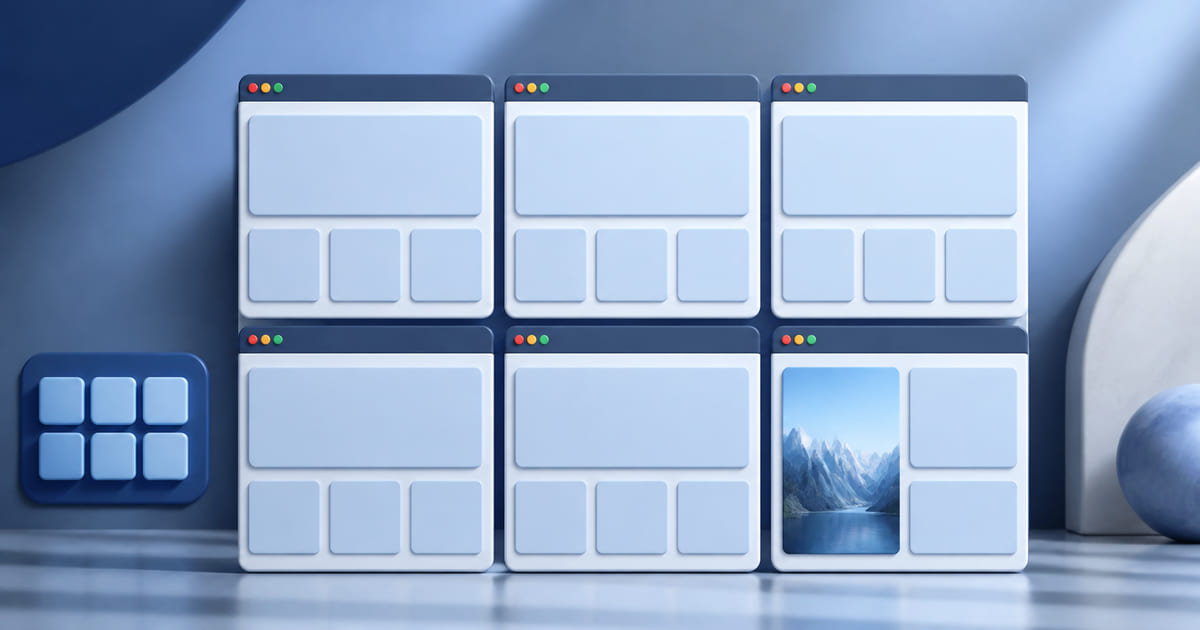
Because you are editing a theme, not designing a site. Platforms like Shopify, Wix and Squarespace give you a finished layout and let you change colours, fonts and images inside it. That is genuinely useful — it is why a site takes an afternoon instead of a month. But the structure underneath is shared with everyone else who picked it, and structure is most of what people recognise.
On this page
What a theme actually gives you
When you pick a theme, you are not picking a starting point. You are picking the finished thing, and being handed a set of controls to restyle it.
You can change the palette, the typeface, the photographs and the words. You usually cannot change the order of the sections, how the navigation behaves, what the product page does before the fold, or where attention lands first.
Those last four are structure — and structure is most of what a visitor recognises. This is why two sites can share no colours and no photographs at all and still feel like the same site.
Why this is not a criticism of themes
Themes solved a real problem, and they solved it well. Before them, a small business either paid for a custom build or had no website. A theme turns months into an afternoon and thousands into tens.
For a great many businesses that trade is correct and remains correct. If you need to be online this week and you are not competing on how you look, take the theme and spend the saved money somewhere it earns more.
The trade only turns bad in a specific case, and it is worth naming precisely.
When it starts to cost you
Sameness is expensive when how you look is part of what you sell.
A restaurant with a considered room, a café with its own identity, a hotel that charges more than the one down the road — these businesses are partly selling atmosphere, and a website that resembles four hundred others quietly contradicts the thing being sold. The customer cannot articulate it. They just arrive with slightly less belief.
It also costs you when you have already built an identity offline. If the menus, the signage and the room all have a specific character, and the website has a theme's character instead, the website is the weakest thing you own.
The three ways out, honestly
Customise the theme heavily. Cheapest, and it takes you further than people expect. The ceiling is real though: you are restyling a structure someone else decided, and the deeper you go the more fragile updates become.
Have a site built. You get exactly what you want. The two well-known costs are money and time. The third, less discussed, is that a custom site is usually one you cannot edit — which is how businesses end up emailing a developer to change a price.
Have a site built, and attach a dashboard to it. The design is yours, and the editing is yours too. This is the arrangement worth asking about, because most people do not know it exists — they think the choice is template you can edit or custom site you cannot.
What the third route looks like in practice
That third option — a site built for you, with a dashboard attached — is what Helm does. The design is made for your business rather than picked from a library, and afterwards you edit the content yourself rather than emailing anyone.
It is worth knowing it exists, because most people never consider it. They assume the choice is a template they can edit or a custom site they cannot, and pick the least bad one.
The question to ask yourself first
Not "is my website nice" — nearly every theme is nice. Ask: if you removed the logo, would a regular customer know it was you?
If the honest answer is no, and your business trades on character, the template is costing you something. If the answer is no and your customers choose you on price, location or convenience, it very likely is not, and you should spend the money elsewhere.