
Templates and lock-in · 3 min read
Should I use a website template?
The short answer
Not at all — templates are the correct choice for a great many businesses, and the snobbery about them is misplaced. The question is fit, not quality. A template works when your business fits the shape someone else designed. It stops working when you spend your time fighting that shape, or when how you look is part of what you sell.
On this page
The honest case for templates
A template is a set of decisions someone made in advance, by someone who has probably made them a hundred times. That is worth more than it sounds.
It saves the expensive part. Structure, spacing, typography, responsive behaviour — the craft that used to cost thousands and took weeks.
It protects you. A template is hard to make ugly. A blank canvas is very easy to make ugly, and most businesses do not have anyone to stop them.
It is fast. Live this week rather than next quarter, which for a new business is often the difference between having a site and not.
You can edit it yourself. Frequently the single biggest advantage, and the one people undervalue. A template you can update beats a custom site you cannot, every time, by year two.
Anyone who tells you templates are simply bad is either selling custom work or has not costed the alternative.
When a template stops fitting
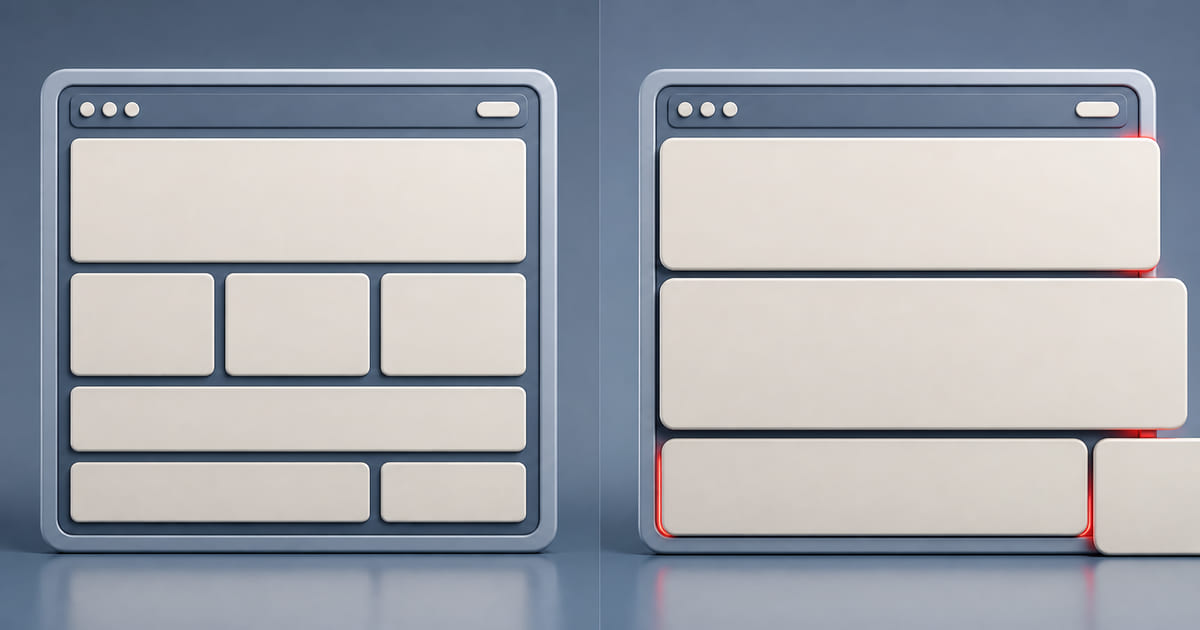
When you fight it. Spacer blocks to force alignment. Text as an image because the text block will not behave. A section hidden on mobile because it breaks. Each is a small defeat, and their accumulation is the signal.
When you need something it cannot do. A booking flow with staff selection. A second language that mirrors properly. A specific structure your trade expects.
When how you look is part of what you sell. A restaurant with a considered room, a studio, a brand-led business. Here resembling four hundred other sites has a direct cost, because the site quietly contradicts the thing you are selling.
When updates keep breaking your changes. You have customised past the point the template was built for.
The test
Not "does it look dated" — that is about you, and you see it far more than your customers do.
Ask instead: if you removed the logo, would a regular customer know it was you?
If the answer is no and your business trades on character, the template is costing you something. If the answer is no and your customers choose you on price, convenience or location, it very likely is not — and the money is better spent elsewhere.
The third option people forget
The choice is usually framed as template-you-can-edit or custom-site-you-cannot. It is a false pair.
A site can be designed for your business and have the content wired to a dashboard you control. That is what Helm does — custom design from the team in days, or a unique site generated by Helm AI, then you edit the text, images, prices and SEO yourself afterwards.
Worth knowing simply because most people never consider it. They compare two options, pick the least bad one, and live with the compromise for years.
If you use a template, use it well
Replace every stock image with a real one. This does more to distinguish you than any layout change.
Rewrite the placeholder copy properly. Template text is generic by design, and generic is what makes template sites feel identical.
Do not customise past the point of safety. If you find yourself modifying the theme's own files, you have swapped the template's main advantage — someone else maintaining it — for its main liability.
Pick a template that matches your content, not one you find beautiful in the abstract. A gorgeous portfolio theme is the wrong shape for a restaurant menu, and forcing it is where the fighting starts.