
Bookings · 5 min read
What does a tattoo studio need on its website?
The short answer
A portfolio organised by artist rather than by the studio, because clients choose a person and a style, not a shop. Then the three things that decide whether an enquiry becomes a booking: how a consultation works, roughly what it costs, and the deposit policy stated before anyone asks. Most studio websites are a gallery with no way through to a conversation.
On this page
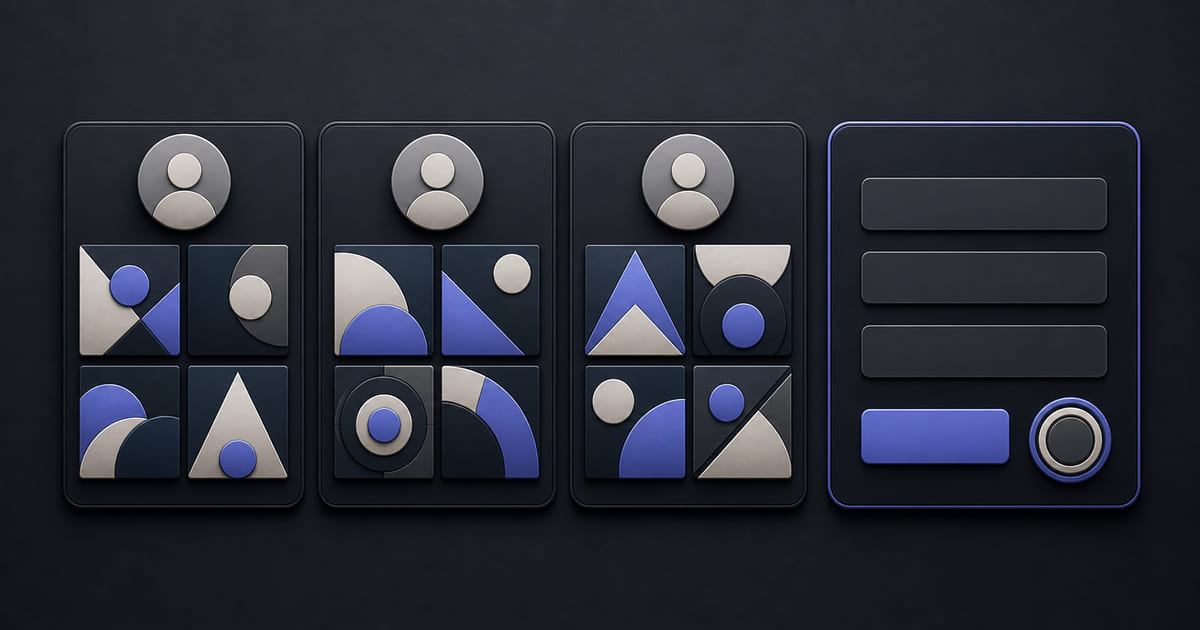
Organise by artist, not by studio
This is the structural decision, and most studio sites get it wrong.
A client is not choosing a shop. They are choosing a person whose work in a particular style they trust with their skin, permanently. That is an unusually high-commitment decision, and it is made by looking at a body of work by one artist rather than a mixed gallery.
So the portfolio should be per-artist, each with their own section, their own work, their styles named plainly — fine line, traditional, blackwork, realism, script, cover-ups — and their own availability or waitlist state.
A single mixed gallery labelled "our work" makes the client do the sorting, and most will not. They will go back to Instagram, where the sorting is already done by account.
The five questions you answer every day
Every studio answers the same handful of questions in DMs, endlessly. Every one of them belongs on the site, which is the only way to stop answering them one at a time.
- How much? Hourly rate, minimum charge, or a range by size. Something.
- How do I book? Consultation first, or straight to a deposit? What happens at a consultation?
- What is the deposit and is it refundable? State it plainly, including what happens if they reschedule.
- How long is the wait? For each artist, roughly.
- Do you do cover-ups / do you tattoo this area / can you work from my reference?
Answering these on the site does two things. It converts the people who were never going to message and just wanted to know. And it filters out the enquiries that were never going to book, which is most of the volume that eats your day.
The pricing question, specifically
Studios resist this harder than most businesses, and the reason is legitimate: the price genuinely depends on size, placement, detail and the artist. A published number could be wrong in either direction.
But refusing to say anything does not remove the question, it just moves it into a DM. And "how much for a small one" answered forty times a week is a real cost.
The workable version is a floor and a shape: a minimum charge, an hourly rate, and one honest sentence — "most half-day pieces land between X and Y; we confirm at consultation." Nobody is misled and the enquiries you get are from people who have already accepted the range. The broader argument is in should I put prices on my website.
Deposits are the whole booking system
For a tattoo studio the deposit is not an administrative detail, it is the mechanism that makes the calendar real.
A booked day that no-shows is not a gap — it is a full day of an artist's income, gone, usually too late to fill. So the deposit needs to be taken at booking, clearly explained before anyone commits, deducted from the final price, and governed by a stated reschedule window.
The failure mode is a deposit discovered late in the process, or a policy that only exists in someone's head and gets applied inconsistently. Both produce the same outcome: an argument, and then a review about it.
Where Instagram fits
Instagram is genuinely where discovery happens in this industry, and no website replaces it. Artists build followings there and clients find styles there.
What it does badly is everything after interest: the price, the wait, the deposit, the booking, the aftercare, and being findable by somebody searching "cover-up artist" in your city rather than scrolling. Those belong on a site you own — see Instagram vs a website.
The practical arrangement is Instagram for the work, the site for the decision, and the link in bio pointing at a page that answers the five questions rather than at a homepage.
What this looks like in Helm
Two things matter for a studio specifically.
The portfolio has to be yours to update. New work happens weekly, artists join and leave, and styles shift. A gallery that needs a developer will be a year out of date, which for a business selling on current work is fatal. On Helm images and artist sections are fields you edit — you drag a photo in and press Go Live — so the portfolio keeps pace with the work rather than with your web developer's availability.
Enquiries and bookings land in one place. Bookings is a module giving you a request inbox and the chairs behind it; forms come with every subscription, so consultation enquiries arrive in a proper inbox with spam handled rather than only in an email. The person enquiring gets an automatic reply carrying the studio's own branding — your logo, your colours, your name as the sender — which for somebody who has just sent a nervous message about a first tattoo does more work than it sounds like.
Clients can attach reference images to the enquiry form, which for this trade is the whole point — an idea described in words and an idea shown as a picture are not the same enquiry, and quoting from the second is far quicker. Up to three files a submission, ten megabytes each, so photographs come through at full quality rather than squashed by a messaging app. It is switched on per studio rather than by default. The images arrive attached to the enquiry on your dashboard rather than scattered across three inboxes, and they are stored privately behind links that expire rather than sitting on a public address.
The short version
Split the portfolio by artist. Answer the five questions on the page instead of in DMs forty times a week. Publish a floor price and a deposit policy before anyone has to ask. And make sure you can update the work yourself, because a tattoo studio's website is only as convincing as how recent the last piece on it is.