
Memberships and courses · 4 min read
Do quizzes actually work for getting leads?
The short answer
Yes, better than a contact form, for one structural reason: a quiz asks people to think about their own situation before it asks for their details, so by the time the email field appears they have already invested something. The result is a warmer lead and more of them. The trap is building a quiz whose result is worthless, which converts once and never again.
On this page
Why a quiz beats a contact form
A contact form asks a stranger to do the hardest thing first: give you their details before they have received anything.
A quiz reverses the order. It asks about them — their situation, their goal, what they have already tried — and every answer is a small investment. By the time the email field appears, the visitor has spent ninety seconds thinking about their own problem and is at the point of wanting an answer rather than being asked for a favour.
Two things follow. More people finish, because the ask arrives after the value rather than before it. And the leads are better, because you now know something specific about each one — which means the follow-up can be a real message rather than "thanks for your enquiry".
That second point is the one businesses underuse. The email address is the least valuable thing a quiz collects.
The structure that works
1. A question people want answered about themselves. "Which training plan suits you", "how healthy is your website", "what is your skin type", "which package fits your business". Not "how much do you know about us".
2. Five to eight questions. Fewer feels trivial and the result is not credible; more and completion falls off a cliff. Multiple choice throughout — free-text kills completion and produces data you cannot use.
3. A result worth receiving. This is where most quizzes fail. If the outcome is "thanks, we'll be in touch", you have built a contact form with extra steps and people will resent it. The result should tell them something true and specific about their situation, including things that are not flattering to you.
4. A follow-up that references what they said. The whole advantage of a quiz is that you know their answers. A generic drip sequence after a personalised diagnostic is a worse experience than no quiz at all.
The honesty test
Here is the question worth asking of your own quiz: would this result be useful to someone who then never buys from you?
If yes, you have a diagnostic, and people will finish it, share it and trust the follow-up. If no, you have a gate with questions painted on it, and it will convert once while quietly costing you the goodwill of everyone who realises.
The counterintuitive part is that a quiz which sometimes tells people they do not need you converts better overall. Being told "honestly, your current setup is fine" is memorable, and the person who hears it is the one who recommends you.
Where they fit
Quizzes work best in two places, and they are not the same tool in each.
In front of the business, as a diagnostic that turns an anonymous visitor into a named lead with context attached. A gym's "which programme suits you". A consultant's "how ready is your business for X".
Inside a course or membership, as a scored assessment — a check that a member has understood a module, or a placement test that decides where they start. Same mechanism, entirely different purpose, and worth knowing that one system can do both before you buy two.
What this looks like in Helm
Quizzes are a module, and what makes them worth having is what they are connected to rather than the quiz itself.
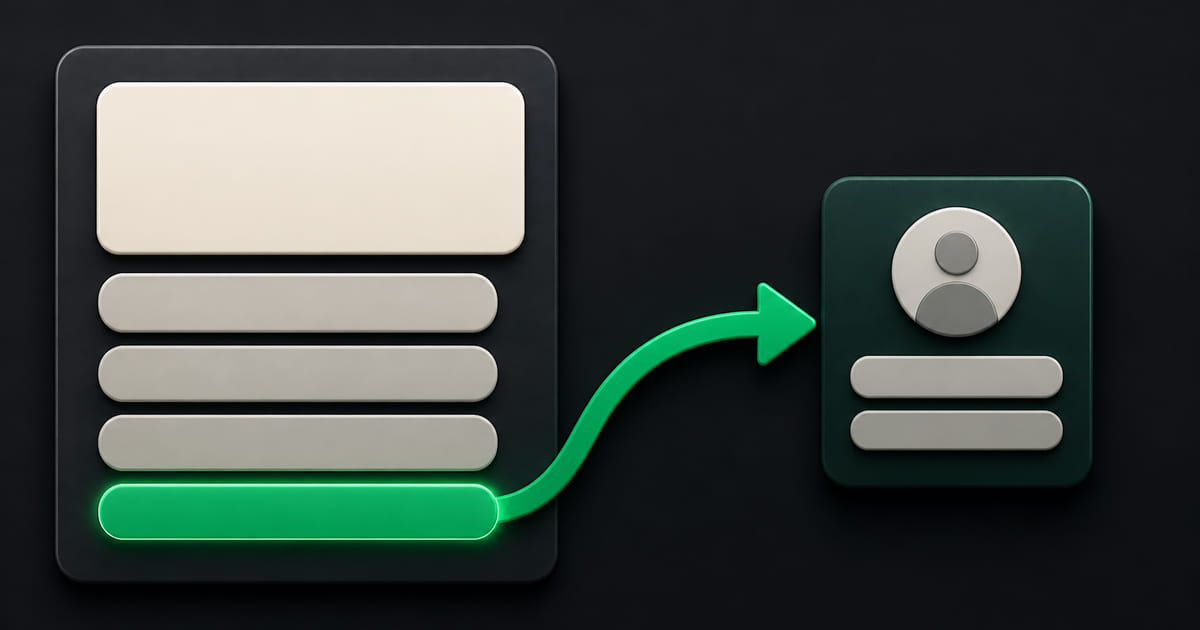
A completed quiz produces a scored result and a Lead — and the Leads module switches itself on automatically when you have a quiz, because a quiz without somewhere for the answers to go is a survey. Each lead carries the answers, so the follow-up can reference what the person actually said.
If the person later becomes a customer, the quiz sits on their customer profile alongside their orders and entitlements. That is the part standalone quiz tools cannot do: on a separate platform the quiz result and the eventual purchase are two records in two systems that nobody ever reconciles, so the context is lost exactly when it becomes useful.
And inside a course, the same module runs scored assessments for members, on the same customer accounts.
The short version
Ask about them before you ask for their details. Keep it under eight questions. Make the result genuinely useful even to someone who never buys. And make sure the answers land somewhere you will actually read them — a quiz whose responses nobody looks at is the most elaborate contact form ever built.