
Memberships and courses · 5 min read
What is a customer loyalty program, and how does it work?
The short answer
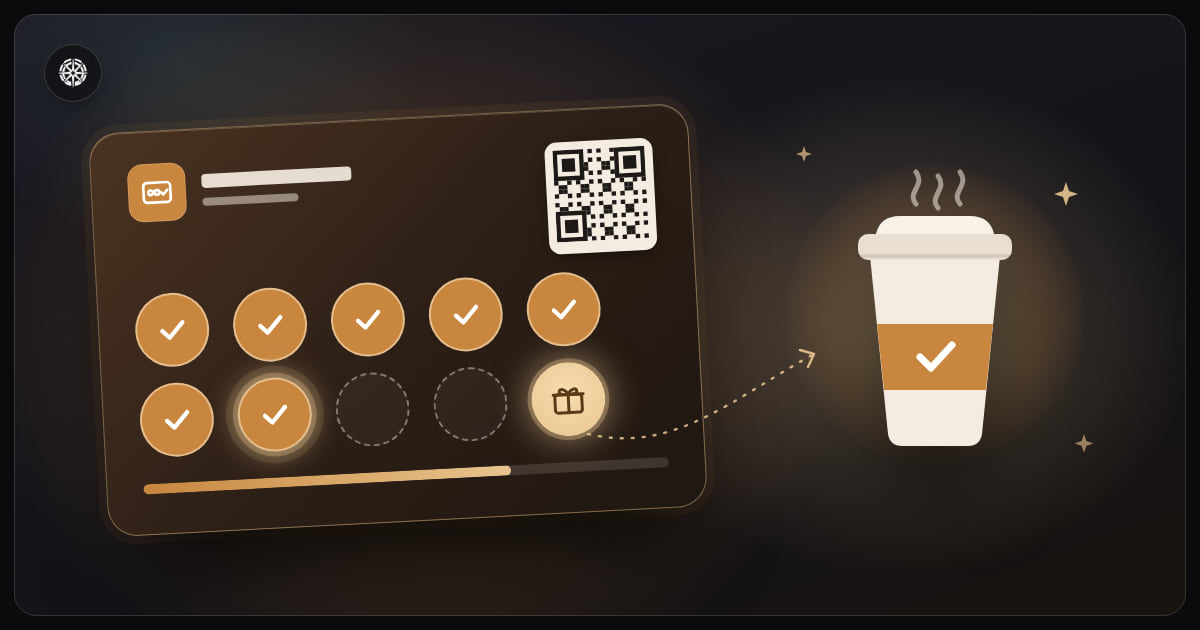
A customer loyalty program rewards customers for coming back. Each visit or purchase earns a stamp or points, and once they reach a set number they get a reward, such as a free coffee or a discount. It works best where customers return often, like cafés, salons and shops, and a digital one shows you who your regulars are.
On this page
What a customer loyalty program is
A customer loyalty program is a standing promise to your regulars: coming back adds up to something. Every visit or purchase earns a stamp or some points, and at a number you choose, the customer gets a reward you choose. The coffee shop card that promises the tenth cup free is the most familiar version, and still the clearest.
It does not create customers. It rewards a habit that already exists and nudges it a little: one more visit a month, or choosing you over the place next door. That is why it suits businesses people return to often, and does little for one they need once a year.
How it works, step by step
- The customer joins: they take a card, or sign up on your website.
- They earn: each visit or purchase adds a stamp or points.
- They reach the threshold: the number you set for the reward.
- They claim the reward, and the count starts again.
That is the whole shape. What makes it succeed or fail is in the detail below.
Stamps or points: the two common mechanics
Stamps. One stamp per visit or per item, and a fixed reward at the end: buy 9 coffees, get the tenth free. Everyone understands it at a glance, and that is its whole strength. Stamps suit a business where visits look alike and the reward is one obvious thing: a café, a juice bar, a barber, a car wash.
Points. Points build up visit by visit towards a reward that can be bigger or further away. They suit a business where visits vary, or where you want room for promotions, like double points on a slow weekday. That is why shops, salons with several services, and restaurants often choose them.
The rule of thumb: if you can name your reward in two or three words, stamps are probably enough. Choose one and keep it. Customers remember one simple rule, not two.
What makes one work
Four things decide whether your customers use it, and the design of the card is not one of them.
- A reward people actually want. Something you sell and they already buy: a free drink, a free trim, a set discount. A reward nobody wants means a program nobody joins.
- A threshold they can reach. If a regular visits weekly, a reward 10 visits away arrives in about ten weeks. Much further than that and most people give up. Work it out from how often your real customers come.
- Easy at the till. Adding a stamp has to take seconds at the busiest hour of the day, or staff will skip it exactly when the queue is longest.
- Knowing who your regulars are. A paper card tells you nothing. A digital one tells you who comes, how often, and who has stopped coming, and that list is often worth more than the reward itself.
Paper card, separate app, or part of your website
A paper card is cheap and everyone understands it, but it gets lost, it is easy to forge, and it tells you nothing. A separate loyalty app gives you the data, but asks every customer to download one more thing, and keeps your customers inside someone else's product. Putting the card on your own website keeps it in one place with everything else you run.
We go through the trade-offs in do I need a separate loyalty app, or should it be part of my website? For how it differs from one business to the next, read the guides for a coffee shop, a salon or barber, a retail shop and a restaurant.
How Helm's Loyalty & membership tools do it
Helm's Loyalty & membership tools put the program on the business's own website, run from the same dashboard as the rest of the site.
- One mechanic per program. You choose stamps or points, set the threshold, and write the reward in your own words: "Free coffee", "A free trim", whatever you sell.
- Offers on top. Six kinds: a boost (double stamps, say), a free item, buy one get one, a percentage off, an amount off, or an offer you write yourself. An offer runs all the time, on the weekdays you pick, or between two dates, and an offer like a free item can be tied to spends over an amount you set.
- Staff have their own sign-in, separate from yours. They find the customer by name or email and add the stamp, and every stamp records who gave it. A short window, 30 minutes unless you change it, stops the same visit being stamped twice.
- The card is on your website. The customer signs in there and sees their stamps, their reward and the current offers, with nothing to download.
The card sits in your customer's account on your site, so it works together with User accounts, and our pricing page shows which plans include both tools.
Is it worth it for you?
A program only pays when your customers already come back on their own. If they visit weekly or monthly, it can raise that; if they come once a year, it will not change anything. We set out that test in full in is a loyalty scheme worth it for a small business?