
Keeping it current · 4 min read
How often should I update my website?
The short answer
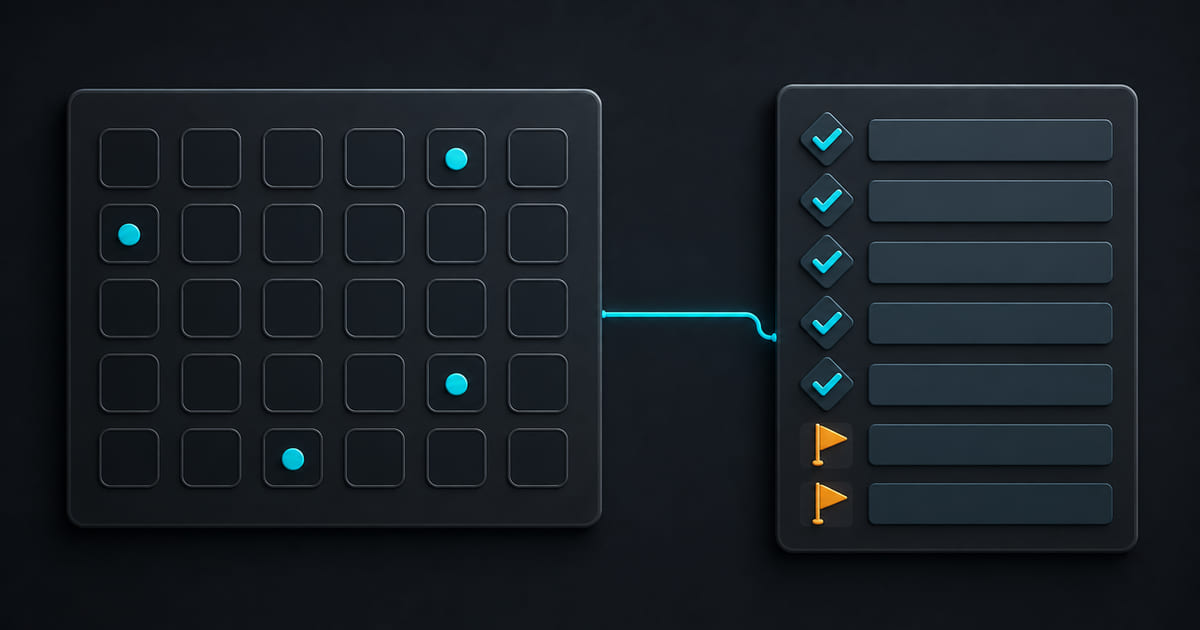
There is no schedule worth following, because the useful trigger is an event rather than a date. Update it the day something changes in the business — a price, an hour, a service, a person. Then run one twenty-minute check a quarter for the things that go stale silently. Sites do not fail because nobody redesigned them; they fail because nobody corrected them.
On this page
The wrong question, gently
"How often" implies a schedule, and schedules for website updates almost never survive contact with running a business. Nobody has ever kept a promise to refresh their homepage monthly.
The frame that works is different: change it when reality changes, and check it when reality has probably changed without you noticing.
Those are two separate habits with two different rhythms, and conflating them is why the advice never sticks.
The event trigger
Anything that changes in the business gets changed on the site the same day. Not next week.
- A price moves
- The hours change, including holidays and seasonal periods
- You add or stop offering a service
- Someone joins or leaves
- A phone number, an address, an email
- A photograph stops being representative — new fit-out, new menu, new equipment
None of these is a project. Each is a two-minute edit, and each of them being wrong costs you a specific customer at a specific moment: the person who arrived at a closed door, or expected one price and heard another.
The only reason this habit fails is friction. If a two-minute edit costs an email and a wait, it stops being a two-minute edit and starts being a thing you will get around to. That is the whole mechanism by which websites go stale, and it is covered directly in why is my website always out of date.
The quarterly check
Twenty minutes, four times a year, for the things that decay without any event to trigger them. Do it on a phone, on mobile data, not at a desk.
- Hours — including the ones you set for a holiday two seasons ago and never reverted
- Prices — all of them, including the one on the page you forgot exists
- People — anyone on the team page who left
- Services — anything listed that you no longer offer, or offer and have not listed
- Links — especially to anything external, which rots fastest
- Photographs — is this still what the place looks like
- The contact form — send yourself a real one, because forms fail silently
- Speed — does it still load in a couple of seconds on mobile data
That is the whole practice. Put it in a calendar four times a year and it will outperform any content schedule you could set.
What does not need updating
Worth saying, because "keep your site fresh" gets over-applied and leads to expensive busywork.
You do not need to redesign it. A design that was good three years ago is almost always still fine — see should I redesign my website. What ages is the content, not the layout.
You do not need to publish for the sake of it. Google does not reward a site for changing; it rewards a site for answering a question well. An article nobody searched for adds nothing, and most business blogs are made of those — see should my business have a blog.
You do not need to touch pages that are still true. A page about a service you still offer, at a price that has not moved, is finished. Leave it alone.
The honest diagnosis
If your site is out of date, the cause is almost never that you did not know it should be updated. Everybody knows.
The cause is that the person who knows the hours changed is not the person who can change the website. That gap converts a two-minute task into a request, and requests get deferred until they get abandoned.
So the real answer to "how often should I update my website" is: as often as your business changes, which is only possible if you can do it yourself. That is what Helm is built around — text, images, prices, menus, hours and the SEO title on each page are fields you edit and press Go Live on, in both languages if you run in both, with a live preview so you see it before anyone else does.
The quarterly check still matters. But it takes twenty minutes instead of producing a list you send to somebody and follow up on twice.
The short version
Change it the day the business changes. Check it properly four times a year. Do not confuse either with redesigning it. And if the reason it is out of date is that updating it means asking someone — fix that first, because no schedule survives it.