
Choosing a platform · 4 min read
Open-source website builders — the honest version
The short answer
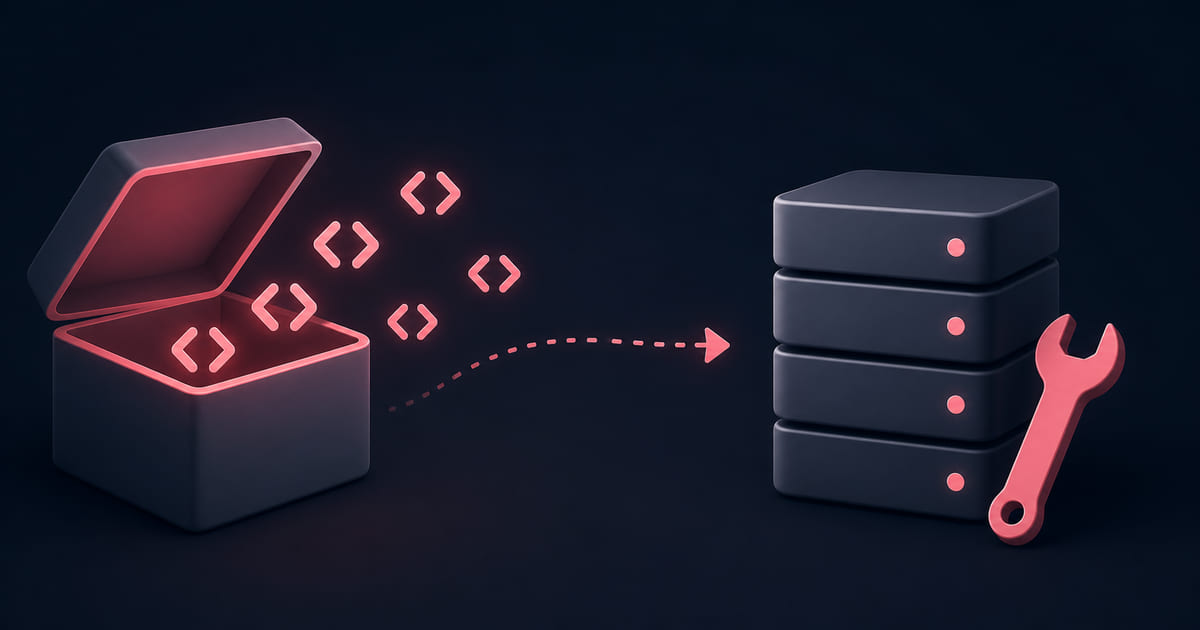
Open source solves ownership completely and solves operations not at all. You get the code, you can move it anywhere, nobody can change the terms on you — and you are now responsible for hosting, updates, security and the thing that breaks on a Sunday. For a business with somebody technical, that is a genuinely good trade. For one without, it is how sites end up abandoned.
On this page
What open source actually gets you
It is worth being precise, because "open source" is often used to mean "free" and they are different claims.
The code is yours. You can read it, change it, host it wherever you like, and take it with you. Nobody can raise the price, change the terms, or discontinue it out from under you.
No lock-in, genuinely. This is the strongest version of the ownership argument on any comparison page, and it is not marketing — it is a property of the licence.
No per-seat or per-feature pricing. The software costs nothing regardless of how much you use it.
If your reason for leaving a builder is that you found out you cannot get your site back, open source is the complete answer to that specific problem.
What it does not get you
Hosting is yours. A server, or a managed host. It costs money and somebody has to choose it.
Updates are yours. Security patches on the core, on themes, on every extension. Skipping them is how sites get compromised; applying them is how sites break.
Breakage is yours. When two extensions disagree, or a PHP version moves, or the site starts erroring at 3am, there is no support line. There is a forum, and there is you.
Nobody is watching. This is the one that actually ends most open-source small business sites. Not a dramatic failure — a contact form that silently stopped sending in March and was noticed in July.
The options, briefly
WordPress is the obvious one and has the largest ecosystem by a wide margin. Covered separately in WordPress alternatives and WordPress or a managed platform.
Ghost is excellent at publishing and memberships and deliberately narrow — if you are a writer or run a paid newsletter it is better than anything else here. It is not a general small business site.
Static site generators produce something fast, secure and effectively free to host, with nothing to update and nothing to hack. The catch is absolute: content changes need somebody who can edit files and deploy. Superb for a site that rarely changes, wrong for a business that needs to change a price.
Self-hosted headless CMSs are a real answer if you have a developer. They are not a small business decision; they are a decision a small business's developer makes.
The question that decides it
Not technical. Ask this:
When the site breaks, who notices, and how long do they take?
If the answer is a named person whose job includes it, open source is a strong choice and the ownership argument is genuinely yours to have. If the answer is "we would find out when a customer told us", then the licence does not help you — you would own a site nobody is running, which is worse than renting one that works.
Where Helm sits
Helm is not open source, and it would be dishonest to imply otherwise. There is no public repository and you cannot fork it.
What it does is split the two things open source bundles together. You get the ownership half: the site is real source code, it is yours, it can move to another host, and the domain is registered in your business's name — so the lock-in problem that sends people looking for open source in the first place does not apply.
You do not get the operations half, which is the point. Hosting, certificates, updates, backups and the Sunday outage are not yours.
That is a genuine trade rather than a free lunch. You cannot audit the platform code or modify how the dashboard works, and if that matters to you — philosophically or because you have a developer who wants that control — open source is the right answer and you should take it. What Helm offers is the practical benefit most people are actually after when they search this, without the job that comes attached.
The short version
Open source solves ownership completely and operations not at all. If you have someone technical, that is a good trade and WordPress or a static generator will serve you well. If you do not, be honest that you would be acquiring a maintenance job rather than a website — and what you probably want is for the code to be yours while the running of it is not.